This guide is written for boutique store owners and wholesale buyers, to help you with assortment planning, in-store display and social-commerce content creation.
Useful cross-category outfit ideas for boutiques connect one customer occasion with a small group of complementary pieces, then show how to wear them together. That gives your rail, website and social content the same clear story.
You have a delivery to unpack, a window to refresh and an afternoon slot to film something for your store. Photographing every new arrival separately feels productive, but leaves the shopper with the work of imagining an outfit. Start with a question she might actually ask: what can I wear from a casual workday to dinner without changing everything?
A focused story gives your selection a purpose. A cooler commute, an informal Friday or an after-work reservation each suggests a different combination. Pick one occasion for each post, rather than fitting a whole seasonal collection into fifteen seconds.
For this edit, start with three visual building blocks: a striped cardigan, a printed blouse and beige wide-leg trousers. They are separate catalog examples, not a photographed three-piece outfit. Use each to illustrate a different route through your assortment.
A brown, black and cream striped cardigan offers a clear visual starting point. In the photograph it is worn open over a white top with dark jeans. That relationship is already easy to read: a patterned outer layer, a simple center and a darker lower half. It appeals to your customers looking for a clear everyday outfit idea for a casual workday or weekend coffee plans.
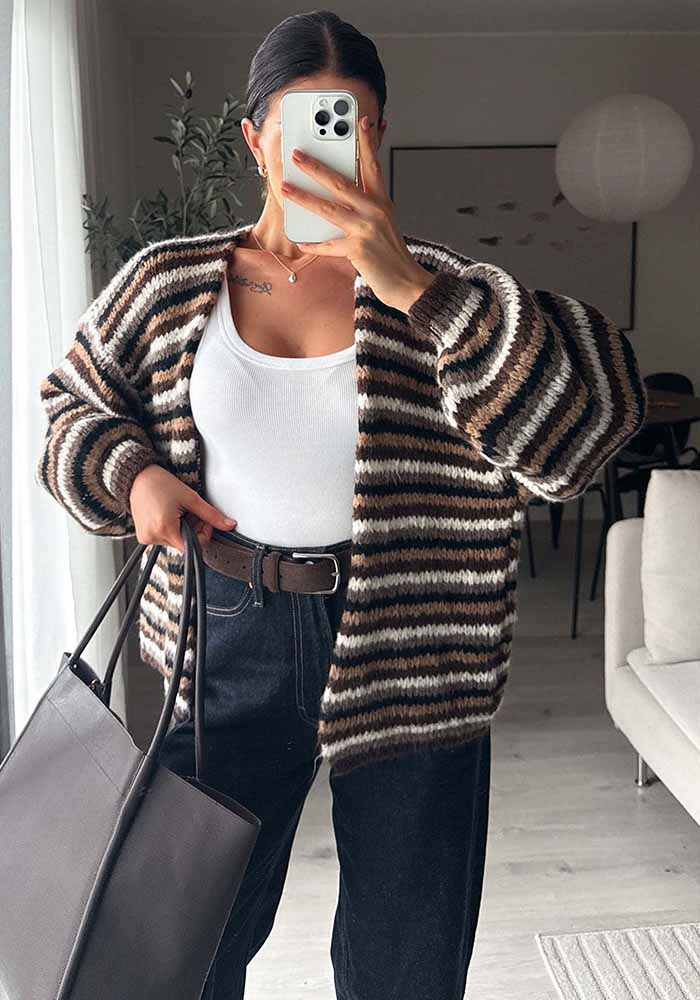
Build a small display around that contrast. Place one patterned layer beside a plain top and a denim option; keep unrelated prints on another rail. When reviewing sweaters and cardigans, look for pieces that add a distinct role to the display rather than several near-identical versions of the same idea.
For a reel, begin with the complete photographed look, then show the cardigan detail. If you have physical samples, film the layer being added and removed. With catalog images alone, use a clearly labeled styling sequence, without implying that separately photographed garments have been worn together.
The brown and cream zebra-print blouse has a wrap-style front, long sleeves and a side tie. Its photograph pairs it with black trousers, giving you an example of a print balanced by a quieter bottom. It appeals to your customers looking for a printed focal point for after-work dinners and informal evening plans.
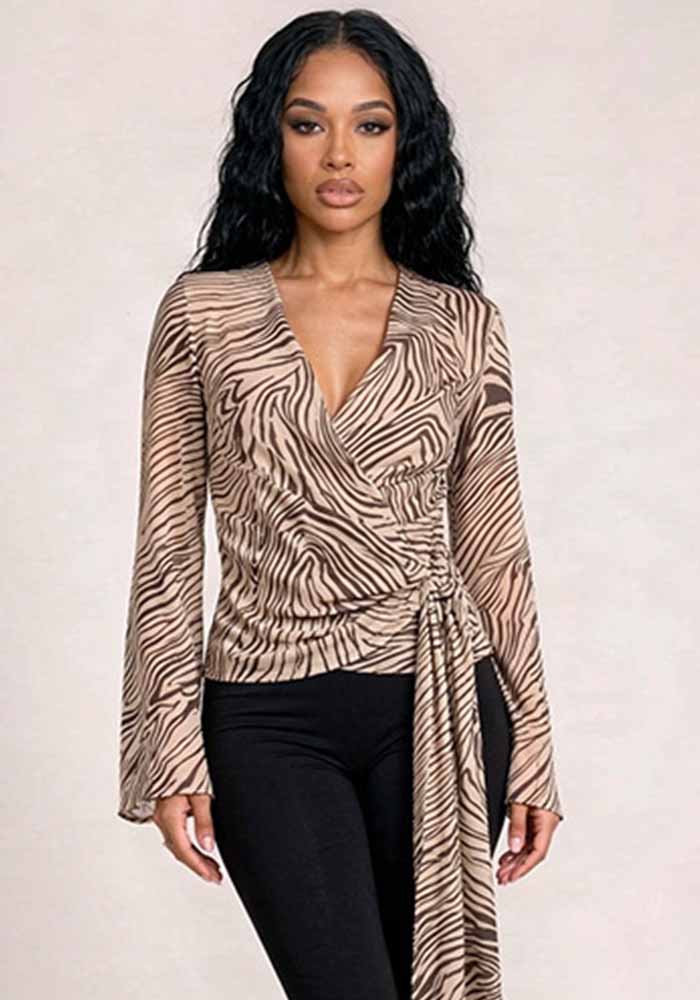
Use that example to create a desk-to-dinner story: the print provides the focal point while a plain lower half keeps the composition readable. A change of earrings or shoes can be suggested in the caption; those accessories do not need to become another purchasing category in this particular edit.
Organize printed blouses and shirts by the outfit problem they solve. One might lead a dinner display, another might connect a workwear rail to denim. This is where boutique outfit stories become useful merchandising: the customer sees a reason for the combination, not just products placed together.
Beige wide-leg trousers with a gathered waist and gold-tone buckle offer a neutral reference for the lower half. They are shown with a white cropped top in their own photograph. Pairing them with the selected cardigan or blouse is a styling proposal to check with samples, not an existing modeled outfit. It appeals to your customers looking for a neutral starting point for workday-to-dinner outfit combinations.
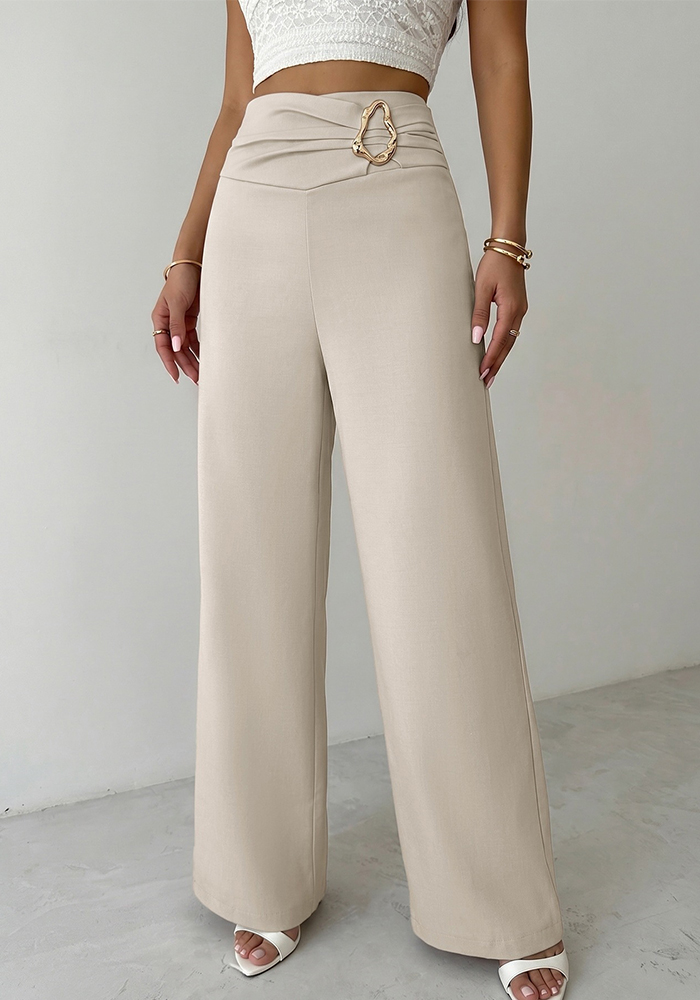
Explore wide-leg trousers and other bottoms.
A connecting bottom can give several tops a place within one small edit. Review the colors and proportions together, then confirm garment measurements before presenting a complete look to customers. A photo can suggest an outline; it cannot establish how two specific items fit when worn together.
Keep a contrasting route available through denim styles for everyday outfit stories. The aim is to give a shopper a useful choice between directions, rather than surround every top with an overwhelming number of alternatives.
Frame one: the occasion. Show the complete look or a labeled pairing board. A short line such as “one print, two evening plans” gives viewers a reason to keep watching.
Frame two: the relationship. Explain one visible decision: stripes around a plain center, a printed blouse above a dark bottom, or a wide leg balanced by a shorter top. Keep the explanation specific enough to use.
Frame three: the next step. Offer one alternative and direct the viewer to the relevant collection. Make sure the destination reflects the pieces discussed. A promising outfit caption followed by an unrelated landing page breaks the connection you have just built.
Use five planning roles as labels for your test, not predictions about sales:
One item can serve two roles. You do not need five separate purchases for every story. For seasonal experiments, start with a small initial buy, check the response and avoid overstocking around one attractive photograph.
Keep a simple record of the occasion, featured categories, image sources and landing pages. Compare saves, useful styling questions and category visits alongside views. Where your analytics allow it, also review account registrations and inquiries; do not assume attention has become an order.
If people ask about the trousers but overlook the top, test a clearer pairing or opening image before adding more stock. Boutique styling content can help you learn which combinations deserve another test. It cannot guarantee sell-through, and a short burst of interest is not a reliable reorder forecast.
Start with one focal piece and two supporting items or categories. Add another only when it changes the occasion or answers a specific styling question. A focused selection is easier to explain on a rail, in a carousel and on a category page.
Yes. Label the composition as a suggested pairing and preserve the original images. Do not describe it as a photographed outfit or imply that the garments have been fit-tested together.
Use photographs for visible color, pattern, garment shape and details. Confirm composition, measurements, care instructions and current availability separately. Never infer stretch, warmth or comfort from appearance alone.
Don’t only look at video views. Prioritize saves, comment questions about styling, and clicks through to category pages. Views are vanity metrics; shopper actions that lead to sourcing research are your real signal. Do not rely purely on social-media performance to set bulk buying quantities.
Stick to one core occasion per piece of content. Limit each story to one hero item plus 1-2 supporting categories. Extra alternatives can live inside category pages instead of one short-form post.
Global-Lover brings multiple womenswear categories into one curated wholesale sourcing session. Use that breadth to compare complementary pieces rather than fill your rail with disconnected arrivals. Explore the tops collection for your next boutique outfit edit, choose a small group with a clear purpose and let your own customer response guide the next step.
By Global-Lover Editorial Team
Hot Search: Wholesale Dresses Dear Fashion Wholesale Swimwear Sexy Club Dresses Wholesale Two Piece Sets
Wholesale Jumpsuits Wholesale Women's Plus Size Clothing Wholesale Womens Tops lovely wholesale 7 Plus Size Camouflage Dresses plus size sheer dress plus size leather lingerie plus size christmas lingerie plus size sequin romper plus size crotchless panties Wholesale Shorts wholesale denim jackets custom face swimsuit wholesale plus size clothing 4x 5x 6x green plus size lingerie army fatigue outfits wholesale loungewear bulk crop tops wholesale bodysuits custom one piece swimsuit wholesale gothic clothing plus size clothing 6x 7x wholesale plus size sexy black dress Black Leather Lingerie