A navy occasionwear assortment works best when color connects the edit and occasion separates the choices. Give a floor-length dress, a shorter evening option and a potential outer layer different jobs, rather than buying several dark-blue garments that answer the same invitation.
For a boutique, the problem often starts at the rail: plenty of eveningwear, yet very little difference between the decisions a customer can make. Another black dress may be perfectly useful. But when every new arrival repeats the same length and level of formality, the range can become harder to explain. Navy offers a color direction worth exploring without turning the entire department into a color experiment.
Navy has appeared in 2026 fashion coverage from both Vogue India and Who What Wear. That shared editorial interest makes it a selection reference, not a sales forecast. For your shop, the useful question is whether a blue edit would fill an actual gap alongside the black occasionwear you already carry.
Start with the invitations your customers ask about. A formal reception, a restaurant celebration and an evening with a jacket requirement do not need identical solutions. The color can make those options feel related while the garment shape tells each story separately. Keep your own customer questions and category results closer to the buying decision than a headline about a color.
There is also a difference between navy and blue in general. A deep navy gown and a brighter blue midi can create a useful comparison, but they should not share a misleading color label. Show the distinction in photography and product descriptions before expecting shoppers to recognize it from a small thumbnail.
Begin the formal end of the edit with evening dresses with a longer silhouette. The navy reference below has a V-shaped neckline, broad short sleeves, a defined horizontal waist panel and a floor-length pleated skirt. Small reflective details are visible across the garment. Those are the details a buyer can use to explain its visual identity.
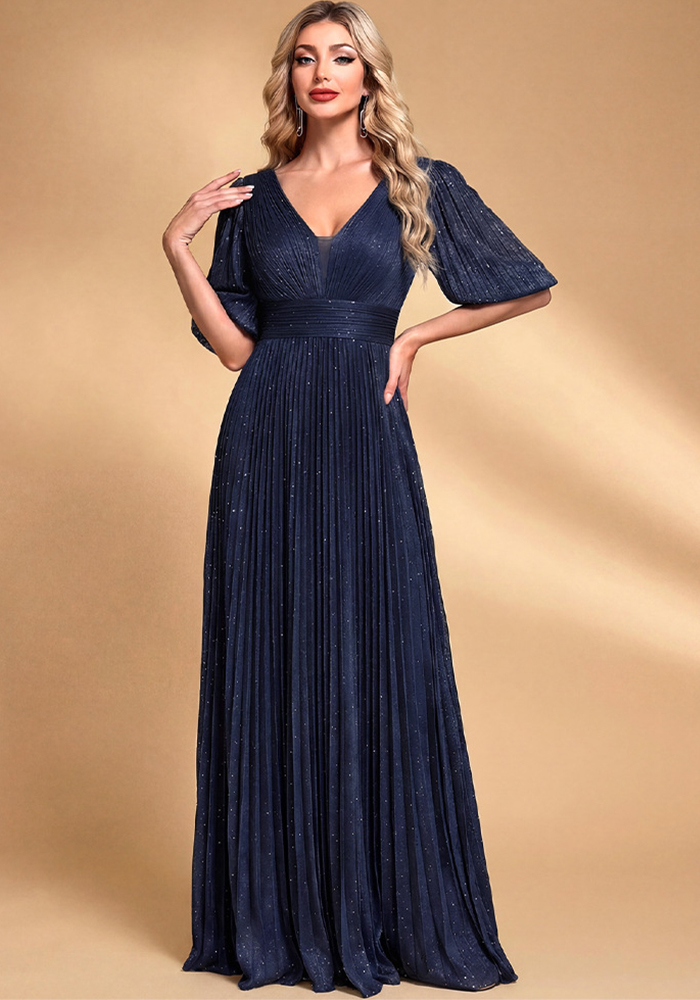
Its merchandising role could be the formal anchor: the piece that makes the invitation behind the collection immediately recognizable. Present it with a full-length image so the skirt remains part of the decision. A cropped neckline photograph alone would hide the very feature distinguishing this option from a dinner dress.
It appeals to your customers looking for an occasionwear option for a formal dinner or reception. That does not mean every event accepts the same dress code. Keep the occasion wording specific enough to be helpful, and leave room for customers to check their invitation rather than promising universal suitability.
For the display, silver-toned earrings or a small pale bag could provide a styling direction. They are optional suggestions, not verified contents of the dress order. If you photograph the garment yourself, show the full hem first and a neckline detail second; avoid letting accessories become the main information in both frames.
A second dress should earn its place through more than a new shade. Within the bodycon dress selection, the brighter blue reference introduces a below-knee length, gathered surface lines and long puff sleeves. It creates a visible alternative to the navy gown without pretending that both garments are interchangeable.
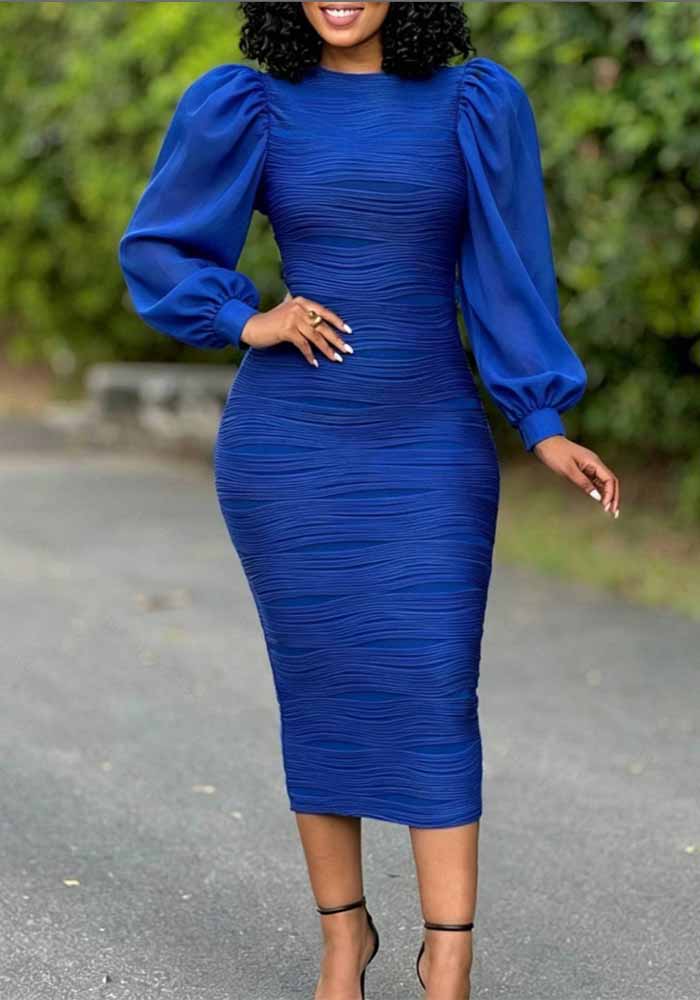
It appeals to your customers looking for a dress direction for a restaurant celebration or an evening party. In a category edit, give this option its own occasion label and show the actual hemline. Calling every dress a gala dress would flatten the distinction you have just paid to create.
Notice what changes between the two references: sleeve shape, garment length and the scale of the surface detail. Those differences give a sales associate or a collection-page introduction something concrete to explain. They do not establish which will fit a particular body, feel comfortable for longer or sell first.
Keep the photographic comparison fair. Use complete garment views at a similar display size where possible, and label navy and brighter blue accurately. A color edit should help a shopper compare choices; it should not depend on making two visibly different shades look identical through image adjustments.
A related jacket and blazer category can introduce contrast without requiring another dress purchase. The white jacket pictured here has a stand collar, a shaped waist, covered-looking front buttons and a flared lower edge. Its value in this article is the visible contrast with the two blue dress references.
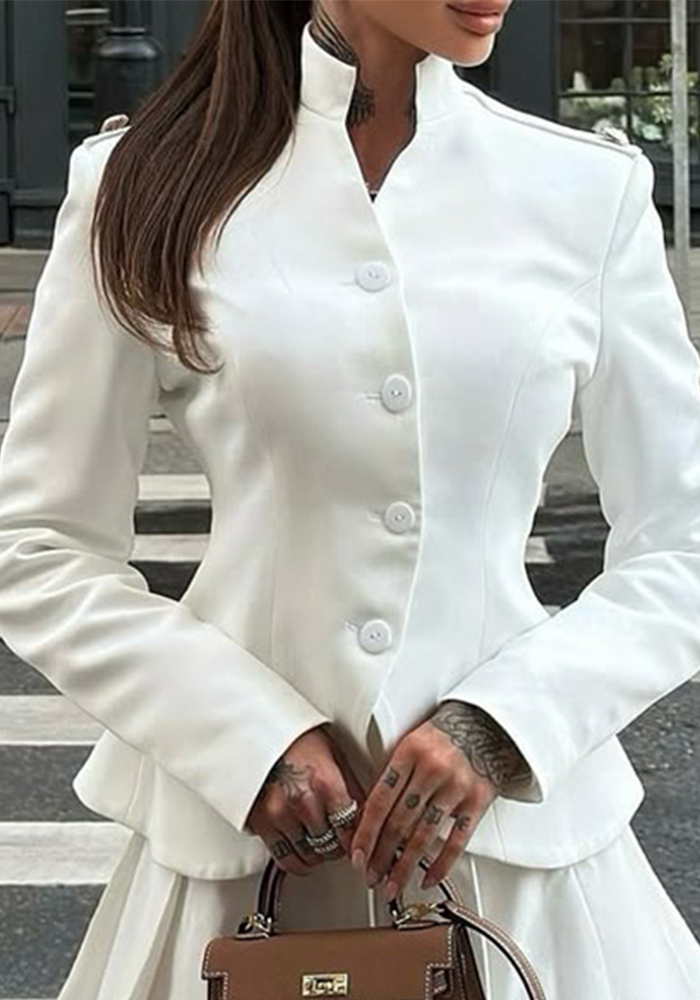
It appeals to your customers looking for a more structured option to consider for an arrival, a reception or a separate evening outfit. The photographed jacket is shown independently. Its collar and sleeve shape are not proof that it will layer successfully over either dress in this edit.
That distinction matters particularly beside the navy gown's broad sleeves and the blue midi's puff sleeves. If you want to sell an actual combined look, check the garments together: shoulder room, upper-sleeve clearance, button closure and where the jacket ends. A visually appealing color relationship is a reason to investigate a pairing, not to describe an untested fit as established.
On a rail, the white jacket can sit near the blue edit as a separate category option. Online, keep its own garment image and product information clear. Describe it as a possible styling direction until you have photographed or otherwise verified the proposed combination.
In the first pass, decide what each item contributes. The navy gown could be the visual hook statement piece. A less occasion-specific dress already serving your customers may remain the core everyday staple. A jacket is a transition layering piece only if its actual use and pairing have been checked. A complementary pairing piece should answer a practical styling question rather than simply share a color.
Keep the high-margin item role separate from appearances. You can assign that label only after checking acquisition cost, intended retail price and relevant selling expenses. A photograph cannot establish margin, and a dramatic dress does not become a profitable anchor by being placed at the front of a rail.
In the second pass, remove overlap. If two shortlisted gowns answer the same invitation, have a similar visual outline and require the same explanation, consider whether one trial would provide enough information. More choice is useful when it creates another meaningful decision, not when it repeats the previous one.
For a seasonal color test, confirm the applicable order conditions and start with a small trial where available. Avoid overstocking before you know whether customers respond to the color, the occasion or the garment itself. Retain enough buying flexibility to follow the actual result rather than committing the whole eveningwear budget to an editorial observation.
Make the first review about questions as well as orders. Are customers opening the formal dress page, comparing the two lengths, or asking what they can wear over the sleeves? A repeated layering question may justify better photography or a verified jacket option before it justifies more navy gowns.
Likewise, a click on the brighter blue midi is not automatically support for expanding navy. Separate responses by garment and destination. Record what each item was intended to test so that the next order follows an answer you can identify, rather than a general impression that the collection looked good together.
No. Treat it as an additional direction when it fills a real category gap. Compare it with your existing occasion coverage and keep established choices where they still serve customers. Editorial interest alone is not a reason to remove working stock.
Not necessarily. Different blues can illustrate different choices, provided their names and photographs are accurate. Group by a clear occasion or color relationship, and do not promise a coordinated color match between separate products without checking them together.
Only when you have verified the actual combination and the purchase contents. Separate product photographs support a proposed direction. They do not establish sleeve clearance, fit, matching color or that the items are sold as a set.
Use item-level response alongside exposure, customer questions, size information and your remaining budget. Distinguish demand for a particular dress from interest in a color edit. No color guarantees a better reorder result.
The aim is a range a customer can understand: a navy formal anchor, a clearly different dress option and a neighboring layer to investigate. Let the color connect those decisions without making every item do the same job.
As a curated wholesale supplier, Global-Lover provides a place to compare related categories during one sourcing visit. Review the eveningwear options relevant to your own occasion edit, narrow the shortlist and verify the details before a small initial test. A coherent selection is more useful than a larger collection of nearly identical assumptions.
By Global-Lover Editorial Team
Hot Search: Wholesale Dresses Dear Fashion Wholesale Swimwear Sexy Club Dresses Wholesale Two Piece Sets
Wholesale Jumpsuits Wholesale Women's Plus Size Clothing Wholesale Womens Tops lovely wholesale 7 Plus Size Camouflage Dresses plus size sheer dress plus size leather lingerie plus size christmas lingerie plus size sequin romper plus size crotchless panties Wholesale Shorts wholesale denim jackets custom face swimsuit wholesale plus size clothing 4x 5x 6x green plus size lingerie army fatigue outfits wholesale loungewear bulk crop tops wholesale bodysuits custom one piece swimsuit wholesale gothic clothing plus size clothing 6x 7x wholesale plus size sexy black dress Black Leather Lingerie