Buying wholesale plus size lingerie starts with separating what the garment is meant to do: a costume statement, an intimate nightdress and a coordinated robe set need different product information, category placement and buying decisions. A shared color or a supplier's broad lingerie label does not make them interchangeable.
Imagine reviewing a small intimate-apparel order. One photograph has a white collar and an apron detail. Another shows a black nightdress. A third presents a robe, top and shorts in the same print. They could look coherent on a buying board, but treating them as one continuous range would conceal three different questions. What brings someone to each product? What information must the listing explain? What would justify ordering more?
This is a buyer's comparison, using three real catalog references to show how those questions change. It is not a forecast of demand or a recommendation that every boutique stock every format. The useful outcome is a clearer buying brief before you commit budget.
A costume-led item begins with a recognizable theme. A nightdress begins with the garment itself. A coordinated set begins with the relationship between its components. Those are different reasons for looking at an item, even when they sit within an intimate-apparel department.
Start your shortlist in the plus-size lingerie collection, then write one sentence describing the role of each candidate. Keep that sentence about the proposed retail use, rather than assumed performance. A themed addition to a specialist edit is a role. A guaranteed high-margin bestseller is a claim you cannot make from a photograph.
| Buying question | Costume-led piece | Nightdress | Coordinated robe set |
|---|---|---|---|
| What identifies it? | A theme expressed through visible design details | The silhouette and garment details | The pictured relationship between separate pieces |
| What needs clarification? | Which themed accessories are actually included | Item measurements, closures and coverage details | The exact component count and available size combinations |
| How should it be presented? | As a clearly identified costume option | As its own intimate-apparel product | As a set only when the contents are confirmed |
| What supports a repeat order? | Your own relevant demand and fulfillment results | Your own size-level response and product feedback | Your own response to the full set and its component mix |
The table is a planning comparison. It does not establish that a costume sells faster, a nightdress is more comfortable or a set earns a higher margin. Those decisions need information from the actual product and your own store.
The first reference is a black-and-white polka-dot costume dress with a white collar, an apron detail and lace side panels. A coordinating headpiece and a hand-held prop also appear in the photograph. The visible theme is specific; it would be misleading to file the image under a generic everyday pajama promise.

For a buyer, that specificity is useful because it creates a precise sourcing brief. You can decide whether your existing customers have a reason to seek a costume-led lingerie option, how it belongs in your navigation and whether the photographed presentation fits the rest of your store. You do not need to turn it into a general sleepwear essential to justify considering it.
Before ordering, confirm the contents. Does the delivered item include the headpiece? Is the apron detail attached or separate? Does the picture show a prop that is used only for photography? Record the supplier's answer against the SKU. The photograph establishes what appears in that shot, not everything that arrives in the package.
There is also a difference between a theme and a selling season. A costume appearance alone does not prove Halloween demand or establish a deadline for replenishment. If you choose to test it within a seasonal edit, begin with a small trial that fits your budget, and avoid overstocking on the strength of a theme alone.
The second reference is a black strappy nightdress with lace panels, front lacing and bow details. It is also cataloged under Plus Size Lingerie, but it does not use the collar-and-apron costume theme of the first example. That difference gives you a reason to consider it separately rather than count it as another version of the same product.
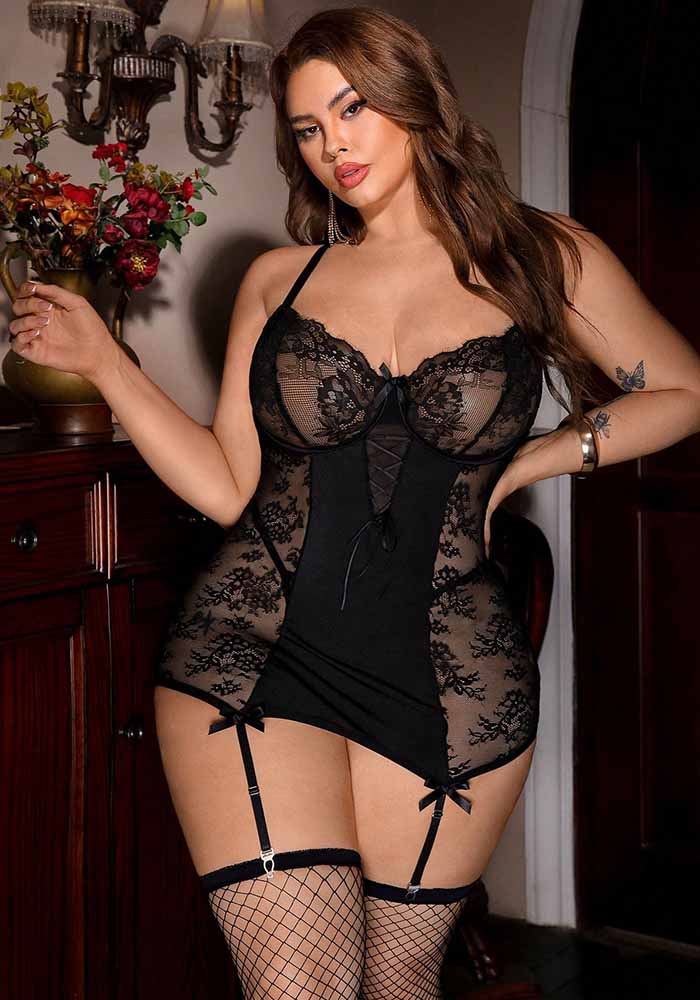
Its purpose on your shortlist is to test a different presentation within the department. You might compare a dedicated nightdress page with a themed collection page, or review whether customers can distinguish the two from the listing thumbnails and titles. This is a navigation and assortment question, not a claim about which design customers prefer.
Notice the stockings and jewelry in the photograph. They contribute to the photographed look, but their presence does not establish that they are included or available as separate products. A useful product page should make the purchased garment clear before inviting the shopper to interpret styling details.
Likewise, visible lace and lacing do not verify fiber composition, stretch, support or adjustability. Ask for the actual specifications and measurements you need. Avoid writing a reassuring benefit into the listing simply because the image suggests it. An unanswered question belongs on the buying checklist until you have an answer.
A broader women's pajama assortment can introduce a different format altogether: several pieces presented as a coordinated group. That is worth comparing with lingerie, but it should remain a distinct retail proposition rather than being folded into an assumed one-size-fits-all intimate edit.
The third reference shows a long leopard-print robe, a matching short top and matching shorts. The catalog places it in the three-piece pajama category. Those visible components make it useful for a discussion of set presentation. They do not establish sleep comfort, fabric performance or a plus-size range for this SKU.
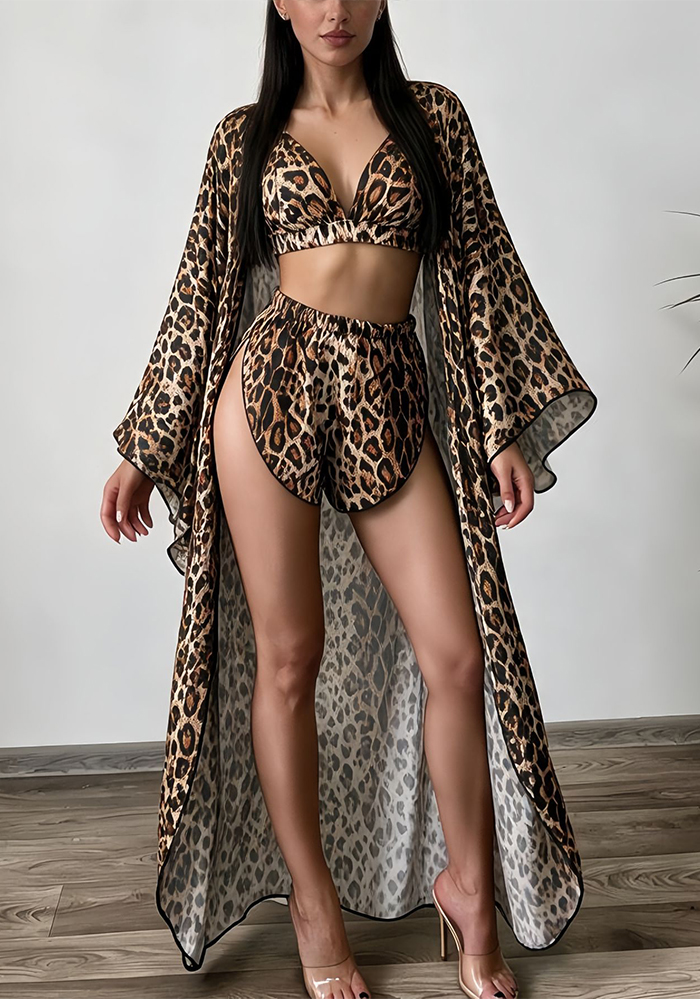
When comparing three-piece pajama formats, check whether the product record identifies each included piece. Ask whether all pieces share a size, whether components can be ordered separately and which item measurements are available. Do not promise mix-and-match sizing unless it is confirmed.
For a store focused on plus sizes, size eligibility is a first decision, not a footnote after selection. This robe-set reference illustrates a neighboring format; it should not enter your plus-size order until its actual size offering and measurements meet your brief. You can retain a useful category comparison without pretending every illustrated item belongs in the same size range.
Once the roles are separate, you can plan the assortment without assuming the three products are a bundle. They were photographed independently and are shown here as category references. A shopper does not need to purchase them together, and a buyer does not need to purchase all three.
Give potential items different jobs in your working plan. A distinctive costume could act as a visual hook. A less theme-specific nightdress could be considered as a core everyday staple within a specialist lingerie offer, subject to real customer response. A robe-set format could provide a complementary category. None has earned those roles merely by being selected for a blog.
Keep the other buying roles explicit, too. A high-margin item is a candidate only after you know costs, intended retail price and relevant selling expenses. A transition item should connect real customer occasions or assortment gaps. A complementary pairing piece needs a coherent relationship to the main purchase, not just the same color.
There is no universal percentage to allocate to those roles. If your store is new to the category, a narrow trial may teach you more than several near-identical designs. If the category already serves your customers, compare the trial against what your existing range lacks. In both cases, protect enough budget to respond after the first evidence arrives.
Prepare the product information you intend to publish before increasing the order. Draft a plain-language title, the component list and a size-information section for each SKU. If you cannot describe what is being sold clearly, the shortlist is not ready for a larger commitment.
For plus-size pieces, compare item-level measurements rather than relying on the category label or a shared alpha size. Decide which measurements your team needs for that garment, ask whether figures describe the garment or a recommended body range, and keep units consistent. A category name alone does not establish equivalent proportions across two products.
Then review how the photography will be used. A garment-specific detail picture can answer a different question from a full-length image. A component photograph can resolve uncertainty about a set. Request the missing view rather than guessing from a styled photograph, and keep the article's image descriptions limited to visible features.
After a trial, separate product response from presentation problems. Category clicks, item views, size questions, orders and return reasons can help you decide what to investigate. A busy page with repeated questions about included accessories may need clearer information before it needs a larger buy. Low exposure does not, by itself, establish weak product demand.
Review the results at a point appropriate to your own traffic and selling cycle. Do not borrow a fixed reorder day or a sell-through threshold from another store. Record what changed, what remains uncertain and what evidence would justify a repeat order. That makes the next decision accountable without pretending it is predictable.
Only when the theme has a clear place in your assortment and you can provide the necessary product information. Treat it as a separate hypothesis to test, with its own navigation and component checks. The presence of a costume in a supplier catalog does not prove that your customers need it.
Do not assume so. Obtain the relevant information for each SKU and confirm what the measurements represent. Reuse a chart only when the supplier has confirmed it applies to those specific products. A common category or size label is insufficient evidence.
No. Confirm the purchase contents against the product record or supplier response. The image can illustrate the visible combination, but the listing must distinguish sold components from photography accessories. Check size combinations at the same time.
Use your own results and remaining information gaps. Consider actual orders, size availability, questions and return feedback alongside exposure. No costume, nightdress or robe-set format has an automatic advantage. A small, documented trial is more useful than an unsupported best-seller prediction.
The buying decision is not whether one image looks more exciting than another. It is whether each item has a defined retail role, enough verified information and a sensible place in your trial budget. Keep costume details, nightdress presentation and set contents distinct, then let real response guide the next order.
As a curated wholesale supplier, Global-Lover provides a place to compare different category directions within one sourcing visit. Start with the plus-size lingerie options relevant to your buying brief, verify the details of a small shortlist and confirm the applicable order conditions before committing. A focused initial test leaves room to learn without filling the stockroom with assumptions.
By Global-Lover Editorial Team
Hot Search: Wholesale Dresses Dear Fashion Wholesale Swimwear Sexy Club Dresses Wholesale Two Piece Sets
Wholesale Jumpsuits Wholesale Women's Plus Size Clothing Wholesale Womens Tops lovely wholesale 7 Plus Size Camouflage Dresses plus size sheer dress plus size leather lingerie plus size christmas lingerie plus size sequin romper plus size crotchless panties Wholesale Shorts wholesale denim jackets custom face swimsuit wholesale plus size clothing 4x 5x 6x green plus size lingerie army fatigue outfits wholesale loungewear bulk crop tops wholesale bodysuits custom one piece swimsuit wholesale gothic clothing plus size clothing 6x 7x wholesale plus size sexy black dress Black Leather Lingerie